There seem to be two camps of people: those who look forward to a new year with an energetic gusto for all things and those who would quite happily delay it indefinitely or skip it altogether. Good for you if you’re all raring to go with your resolutions and a fresh start, but I entirely understand if you rather be woken up in the spring.
If you share in my unfortunate disposition to dread the first month of the year (at the very least), then you might also find it quite necessary to try to make January something more than barely-bearable. And this begins now, as the dread stirs deep in my chest, in the hinterland period between Christmas and New Year.
This isn’t necessarily an easy time of year in itself, with Christmas being a splendid magnifying glass for whatever you are experiencing. Obviously, this is great if you are in a wonderful place having a wonderful time full of wonderful feelings… but with regards to whatever we already find hard – difficulties with relationships, with eating or food, with mental or physical health, with money, etc. etc. – it is a potentially highly unwelcome effect, because, whatever it might be, it’s surely amplified at Christmas. I hope you can be patient and kind to yourself and others through whatever you and/or they are finding difficult and know that things don’t have to be perfect to be good.
Subscribed
Then there’s the fact that some people seem to do and expect a lot of this period, filling it with plans and activities, socialising and travelling, and more. Personally, I find this very overwhelming and think what constitutes a good week between Christmas and New Year is having as few demands placed on oneself as physically possible, and I’m also particularly pleased if I can be horizontal for much of the time. This time is a rare opportunity to slow down and not do, where a significant portion of the population is also slowing down and not doing. I very much enjoy the feeling that, much like in the depths of lockdowns, the world slows to my speed once more and I know that I am not, in fact, behind.
So, we make it to the New Year, and then comes what I have been dreading since the end of BST in Autumn: January. With all it’s bleak, dark, cold, wet, depths. The swift approaching winter and short daylight hours were manageable while December lay ahead of us. But now… now everyone (yes, this is a sweeping statement, of course, I know it is not actually true) is depleted, without festivities to look forward to, and full of pressure to suddenly be a new, better version of themselves. Many are hit hard with S.A.D and general depression at this time (did you know that the general depression rates in the UK soared after the pandemic1 and remain high?).

And with this all in mind, I prepare for depression. But I sincerely hope for something better. I hope for a month that is, if not joyful, then at least peaceful. So, here is my battle plan, which I hope will be of use to many of you:
Begin with prioritising the basics – exceptionally boring I know, but a necessary foundation: looking after yourself by eating well and sleeping well goes a long way. We do need more sleep in winter, by the way. I’m sure you know how much harder it is to feel well and neutral-positive on the mood scale if you’re depleted in this department. I’m not a big advocate for the extremes of dry-January, but certainly drinking less helps with all this too.
Get some daylight – the reduced daylight hours and rare sightings of the sun make January a Seasonal Affective Disorder paradise (highlights include low mood, hopelessness, loss of enjoyment, fatigue, withdrawal, changes to appetite and sleep – what fun!). Getting out in the daylight (even if it’s overcast) or perhaps sitting in front of a light box can make a world of difference. Taking vitamin D supplements can be recommended too (almost 40% of white adults are vitamin D deficient in the winter2). A slither of joy for me comes from periodically exclaiming “its not dark yet!” after 4pm and excitedly calculating when it will be light in a month or two’s time.
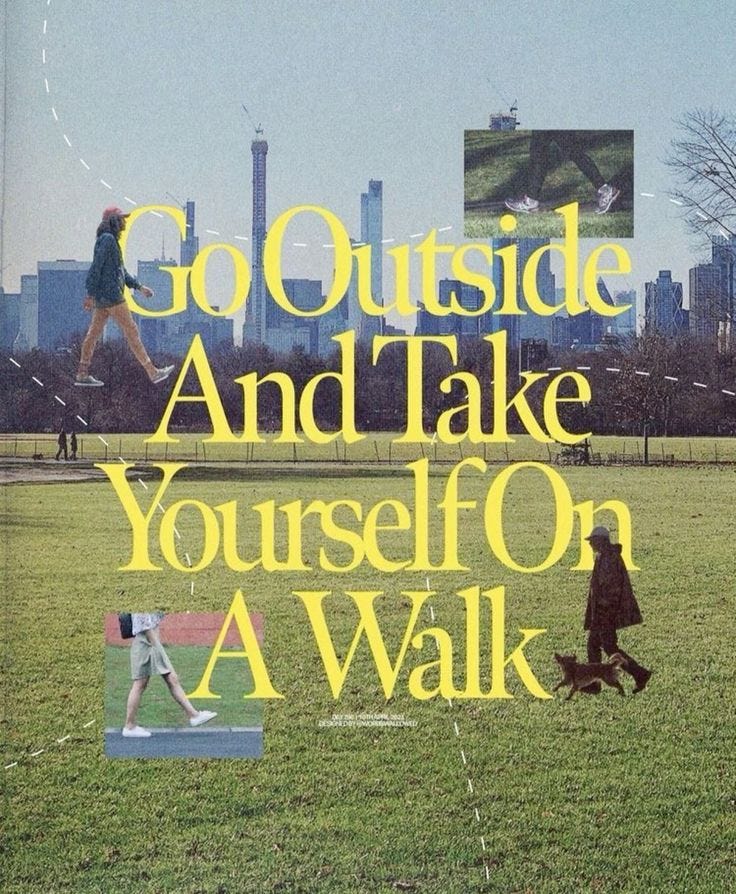
Going for a stupid walk for my stupid mental health – typically I find that the less I want to go outside the more I probably need to. I’m too tired, I’m too busy, I have other things I must do, I’ll do it later. No! Begone! So, begrudgingly, I shall drag myself to the park where you will find me looking for dogs, and on my return, my mood and energy will be much improved (likely directly proportional to the number of dogs seen) and I will return to whatever I was doing with renewed vitality. Admittedly this is all much more easily done when there is even a hint of blue skies or sunshine. But walking is good for us and our brains, I recommend it highly. In fact, people who get their 150 minutes of recommended weekly exercise through brisk walking are 25% less likely to develop depression3. So just try be active in some way, whatever that looks like for you, and remember that extremes aren’t necessary.
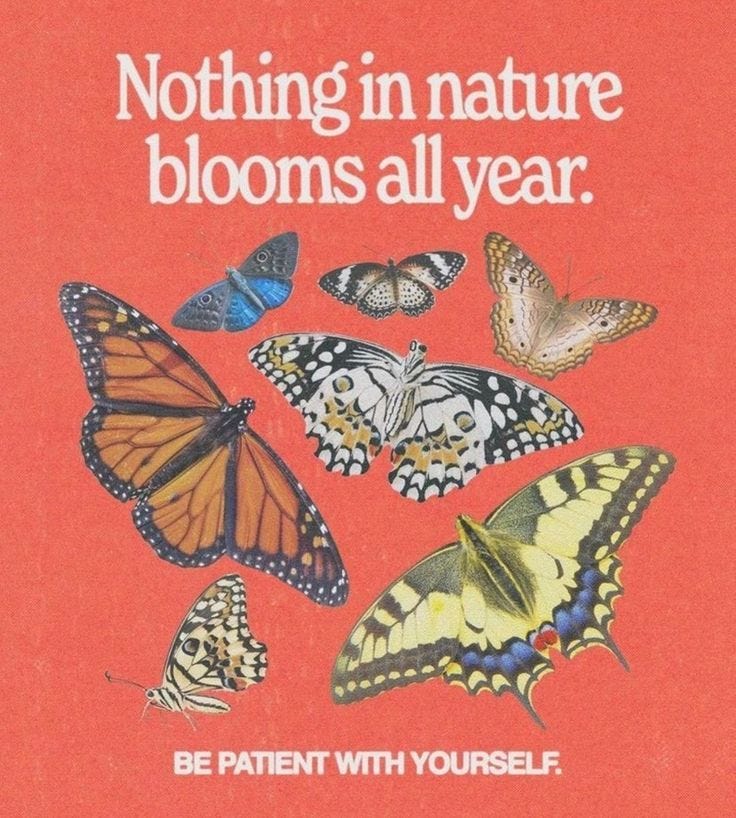
Lean into the slow – bring what you can of the slowness of this time with you. Find time for solitude and connection, for doing and resting. See if you can be comfortable with the quiet, and if you can’t, how interesting that is. Maybe you can look to nature for inspiration, where nothing blooms all year round and many animals hibernate. Some people are definitely more sensitive to the changing of the seasons than others, and those of us need to lean into adapting our pace and expectations of ourselves, without judgement or criticism.
Have things to look forward to – the opposite of depression is not happiness, but hopefulness. Having something to look forward to that makes you feel good (in whatever variation) is perhaps the easiest way to access feeling hopeful. There is a balance to be found, of course, one that can be hard to attain: make nice plans without overwhelming or overburdening yourself. Whatever those things might be, big or small, alone or with others, carving out time to do what you actually want to do, things that top up your cup and make you feel both alive and yourself, is vitally important. I appreciate it can feel like a luxury or an indulgence, but I assure you it is a necessity.
Ditch the “new year, new me” mindset – as we head into the new year, it’s natural to think about setting goals or making changes, but look, you’re still you and a new year/month/week/day doesn’t change that. While New Year’s resolutions can feel inspiring at first, they often come with pressure or unrealistic expectations, which can make them hard to sustain. Don’t get me wrong I am all for having healthy, attainable goals that can shape you and your life. But get rid of the pressure and the inflexible societal timelines if they aren’t helping you (hint, they’re probably not helping you). Looking after yourself is an all-year-round task, and focusing on small, meaningful changes and celebrating progress along the way can lead to lasting transformation. It also takes the pressure off needing to ‘get it right’ from day one. And if you do set goals, a useful guideline from James Clear is simply don’t miss/mess up twice in a row, to avoid a pattern of failure without falling into perfectionism.
So, that’s how I’ll be trying to do it, how I’ll make it through this strange limbo into January and beyond, clutching to the hope of Spring and Summer. If you would like to aid me in my mission, please send me pictures of dogs and/or new therapy clients – both will surely produce joy and delight in my very soul!Message Luciana DiMascio
I would like to close by saying I’m very sorry for anyone reading this with a January birthday. It’s nothing personal and I feel for you, and at least you have something concrete to look forward to, I hope?
1 Coronavirus and depression in adults, Great Britain: July to August 2021 https://www.ons.gov.uk/peoplepopulationandcommunity/wellbeing/articles/coronavirusanddepressioninadultsgreatbritain/julytoaugust2021
2 Meeting Vitamin D Requirements in White Caucasians at UK Latitudes: Providing a Choice https://pmc.ncbi.nlm.nih.gov/articles/PMC5946282/#:~:text=However%2C%20the%20cross%2Dsectional%20National,in%20Southern%20England%20than%20in
3 Association Between Physical Activity and Risk of Depression: A Systematic Review and Meta-analysis https://pubmed.ncbi.nlm.nih.gov/35416941/